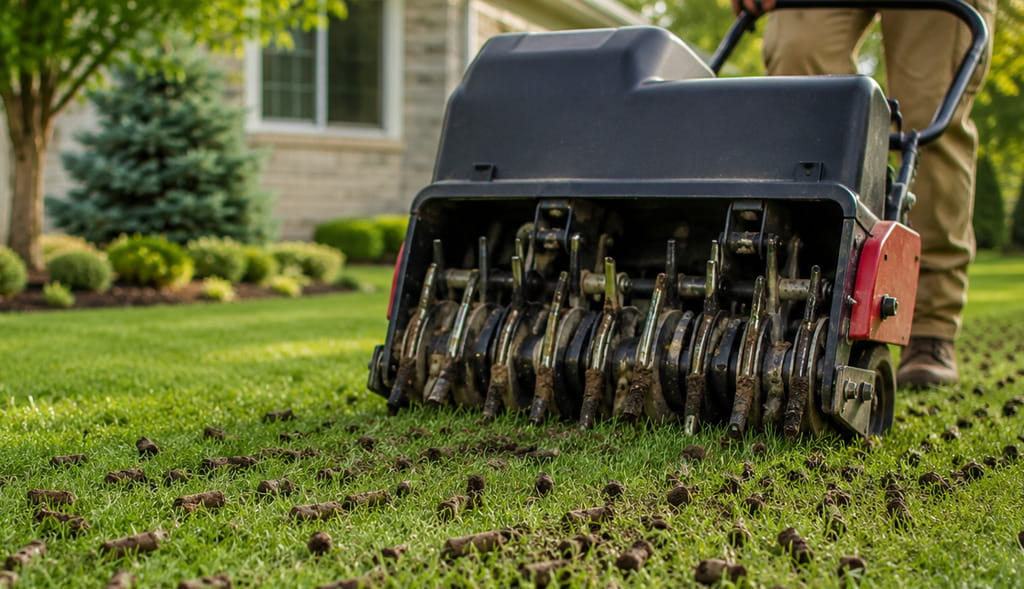
After a long summer of heat, foot traffic, mowing, and changing weather conditions, your lawn may be heading into fall under more stress than it appears. Even when grass still looks relatively healthy from the surface, the soil underneath can become compacted and make it difficult for roots to get the water, nutrients, and oxygen they need.
For many Southeast Michigan lawns, fall aeration can help relieve that compaction and create better conditions for recovery before winter. But how do you know whether your lawn actually needs it? Here are five signs worth watching for as summer comes to an end.
1. Water Puddles or Runs Off Instead of Soaking In
After watering or a moderate rainfall, pay attention to what the water does. If it collects on the surface or quickly runs toward sidewalks, driveways, and lower portions of the yard, compacted soil may be preventing proper absorption.
Healthy soil contains small spaces that allow water and oxygen to move toward the root zone. As soil becomes compressed, those spaces shrink. Aeration creates openings in the lawn that allow water to penetrate more effectively rather than remaining on the surface.
Keep in mind that persistent standing water can also indicate a larger drainage problem. Aeration can help with soil compaction, but it is not a substitute for correcting poor grading or significant drainage issues.
2. Your Lawn Feels Hard Underfoot
Sometimes the easiest way to identify compaction is simply walking across the lawn.
Healthy soil generally has some give beneath your feet. If the ground feels unusually hard and dense, especially after a dry summer, your lawn may benefit from aeration.
This is particularly common in high-traffic portions of the property. Areas around patios, walkways, play spaces, and frequently traveled paths often become compacted faster than quieter parts of the lawn.
3. Grass Is Thin in High-Traffic Areas
If you notice grass becoming noticeably thinner where people, pets, or equipment frequently travel, soil compaction may be part of the problem.
Traffic does more than flatten grass temporarily. Repeated pressure compresses the soil beneath the turf, making it more difficult for roots to spread and receive the resources they need. Over time, grass in these areas may become weaker and thinner even when the rest of the lawn remains healthy.
Aeration helps loosen these compacted areas and creates a better environment for roots to grow.
4. Your Lawn Struggled During Summer Heat
Michigan summers can be difficult on cool-season turf, particularly during stretches of high temperatures and limited rainfall. If your lawn browned quickly, wilted frequently, or seemed to struggle more than expected this summer, shallow or stressed roots may be contributing to the problem.
Compacted soil limits root development. When roots cannot grow deeply, grass has less access to moisture during hot, dry conditions.
Fall aeration can help improve the soil environment after summer stress and give the lawn an opportunity to strengthen its root system while growing conditions are more favorable.
5. It Has Been a While Since Your Lawn Was Aerated
Your lawn does not necessarily need to show obvious signs of severe compaction before aeration becomes beneficial.
Southeast Michigan properties with heavier soils, regular foot traffic, or consistent lawn use can gradually become compacted over time. If your lawn has not been aerated in several years, it may be worth evaluating whether compaction is limiting its potential.
Consistent lawn care is often about preventing problems rather than waiting until the turf visibly struggles.
Why Fall Is a Great Time for Lawn Aeration in Southeast Michigan
Timing matters when it comes to aeration. Many Southeast Michigan lawns consist of cool-season grasses that become more active again as the intense heat of summer fades and temperatures moderate.
Aerating during this recovery period helps create better access to air, water, and nutrients while the lawn is actively growing. It can also complement other fall lawn care services by improving conditions at the soil level.
Rather than viewing aeration as a quick fix for a struggling lawn, it is better to think of it as one part of a broader approach to building stronger, healthier turf.
Help Your Lawn Recover Before Winter
Summer can leave Southeast Michigan lawns compacted, stressed, and in need of some attention. Addressing those conditions in the fall gives your grass an opportunity to recover and strengthen before winter dormancy begins.
Transitions Outdoor Services helps homeowners and commercial property owners throughout Southeast Michigan maintain healthier lawns through seasonal services such as professional lawn aeration and ongoing lawn care.
If you are noticing compacted soil, thinning grass, poor water absorption, or other signs of summer stress, now is a great time to evaluate your lawn and determine whether fall aeration should be part of your seasonal care plan.