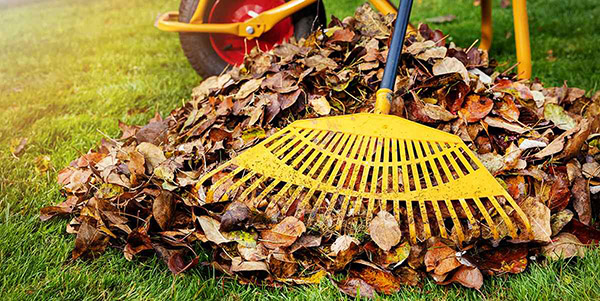
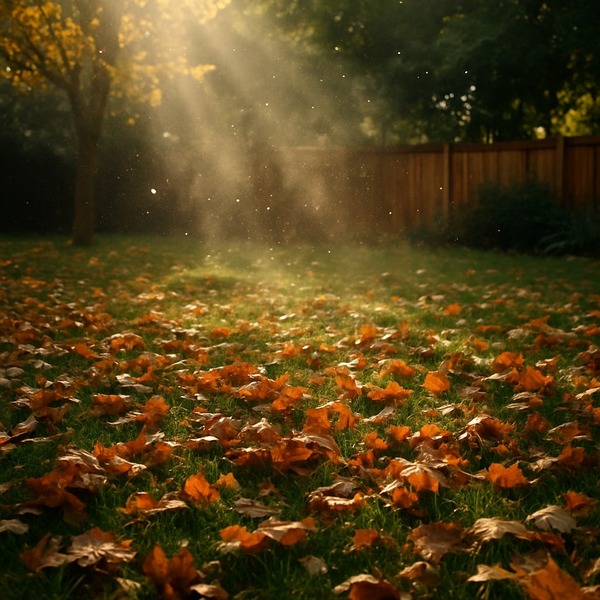
Putting off fall clean-up doesn't just affect how your yard looks in November. It sets the stage for problems that show up in March and April—dead patches, lawn disease, pest activity, and higher recovery costs. Here's what actually happens when leaves, debris, and overgrowth are left in place through winter, and how a proper fall clean-up prevents it.
1. Smothered Turf and Dead Spots
A dense layer of wet leaves blocks sunlight and air from reaching the grass. Under snow, those leaves mat down and hold moisture against the turf.
What you'll see in spring:
- Yellowing that turns to bare or thin patches
- Weak root systems that don't rebound with normal mowing and fertilizing
Prevention: Full leaf removal (not just blowing to the fence line) and a final mow to keep the canopy breathable going into winter.
2. Higher Risk of Lawn Disease
Cool, damp conditions plus decaying organic matter create ideal conditions for snow mold and other fungal issues.
What you'll see in spring:
- Matted, gray or pink patches that linger for weeks
- Thin turf that requires reseeding to recover
Prevention: Remove leaf build-up from lawn and beds, cut back perennials that trap moisture, and improve airflow at the soil surface.
3. Avoidable Spring Costs and Delays
Skipping fall work doesn't eliminate it—it defers and multiplies it.
Typical spring catch-up:
- Heavy raking to break up matted layers
- Spot repair and overseeding
- Bed rebuilds and mulch refreshes
- In some cases, aeration to relieve compaction
Prevention: A fall clean-up reduces or eliminates most of this, accelerating green-up and cutting labor in April.
4. Pest and Rodent Habitat
Leaf piles and overgrown beds provide cover and nesting material for voles, mice, and insects close to the foundation.
What you'll see in spring:
- Runways or chewing damage in turf
- Increased activity near structures
Prevention: Remove piles, clear bed debris, and keep edges tidy before snow cover.
5. Soil Compaction and Matted Grass
Organic layers compressed by freeze–thaw and snow reduce pore space and block new growth.
What you'll see in spring:
- Slow rebound after the first mow
- Poor seed-to-soil contact in repaired areas
Prevention: Finish fall with the lawn clear and at a proper height; schedule spring aeration because you chose it—not because compaction forced it.
What a Professional Fall Clean-Up Should Include
At Transitions Outdoor Services, our fall service is designed to prevent the problems above and speed up spring recovery.
- Complete leaf removal from lawn, beds, window wells, hard edges, and fence lines
- Bed clean-out and perennial cutbacks to reduce mold and moisture traps
- Final mowing and edging for clean airflow at the surface
- Optional mulch touch-up and winter bed prep, when appropriate
Service area: Plymouth, Northville, Novi, Livonia, South Lyon, Farmington, and Farmington Hills.
Ready to Button Up Your Yard For Winter?
Don't leave spring results to chance. A targeted fall clean-up now prevents dead spots, disease, and costly recovery work later.