If you've invested in boxwood shrubs for their clean, classic look, or if you manage a property that features ornamental hedges, you'll want to be aware of a serious pest making its way across Southeast Michigan: the box tree moth.
While this invasive caterpillar isn't a threat to Michigan's native trees or forests, it can cause severe defoliation and even kill boxwood plants, a staple in many local residential and commercial landscapes.
What Is the Box Tree Moth?
The box tree moth (Cydalima perspectalis) is an invasive species originally from Asia, now spreading across the Midwest. It feeds almost exclusively on boxwoods, and if left untreated, a single infestation can strip shrubs down to bare stems.
Caterpillars are greenish-yellow with white, black, and yellow stripes and dark spots. As they mature, they hide deep in the foliage, making them difficult to spot early on. Adult moths have distinctive white wings with brown borders and a small white mark in the center of each forewing.
Signs of Infestation
Because early infestations can go unnoticed, it's important to regularly check your boxwoods; especially if you live in Southeast Michigan. Look for:
- Chewed, yellowing, or missing leaves
- White webbing inside or around the plant
- Black-green droppings (frass) near the base
- Skeletonized leaves or twigs stripped of foliage
Unchecked infestations lead to severe defoliation, dryness, and eventual plant death.
What the Quarantine Actually Means
To slow the spread, the Michigan Department of Agriculture and Rural Development (MDARD) has implemented an interior quarantine across 13 Southeast Michigan counties: Wayne, Oakland, Macomb, Washtenaw, Livingston, Monroe, Lapeer, St. Clair, Ingham, Jackson, Clinton, Eaton, and Lenawee.
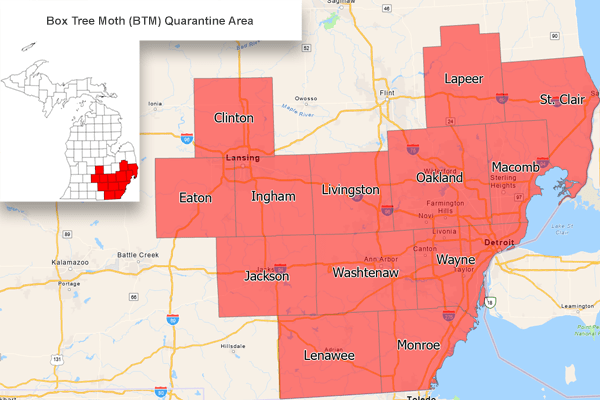
This quarantine affects plant material, not people:
- Nurseries and landscapers inside the zone must follow strict rules when selling or transporting boxwoods elsewhere.
- Homeowners inside the zone don't need to report damage (it's already a known risk area).
- Homeowners outside the zone are asked to report suspected sightings so officials can track any spread.
If you live in Plymouth, Northville, Livonia, Novi, or Farmington, you're likely inside (or right next to) the quarantine area, so regular inspections and rapid treatment are crucial.
What to Do If You Suspect Box Tree Moth
If you're outside the quarantine, report suspicious damage with photos at Michigan.gov/ReportBTM.
MDARD's recommendations once an infestation is confirmed:
- Prune affected branches if damage is light.
- Cut the entire shrub to its base if damage is heavy; boxwood often regrows from roots.
- Double-bag debris in plastic and dispose of it with household trash (check local guidelines).
Is There a Treatment?
Yes. Michigan State University lists several insecticides proven effective against box tree moth caterpillars. Many are available over-the-counter, but if you manage multiple shrubs or large hedgerows, consider having a professional handle the application.
For the latest guidance, visit the MSU Box Tree Moth resource page or Michigan.gov/invasives.
Protect Your Landscape Now
Whether you're a homeowner in Livonia noticing chewed leaves or a property manager in Novi maintaining pristine hedges, now's the time to act. Regular inspections, early detection, and prompt treatment can save your boxwoods before it's too late.
If you're unsure what to look for, or want help treating your shrubs safely, Transitions Outdoor Services can assess your landscape and recommend next steps to keep your plantings healthy and pest-free.